Conversational Commerce in 2026: Why Messaging Beats Traditional Checkout
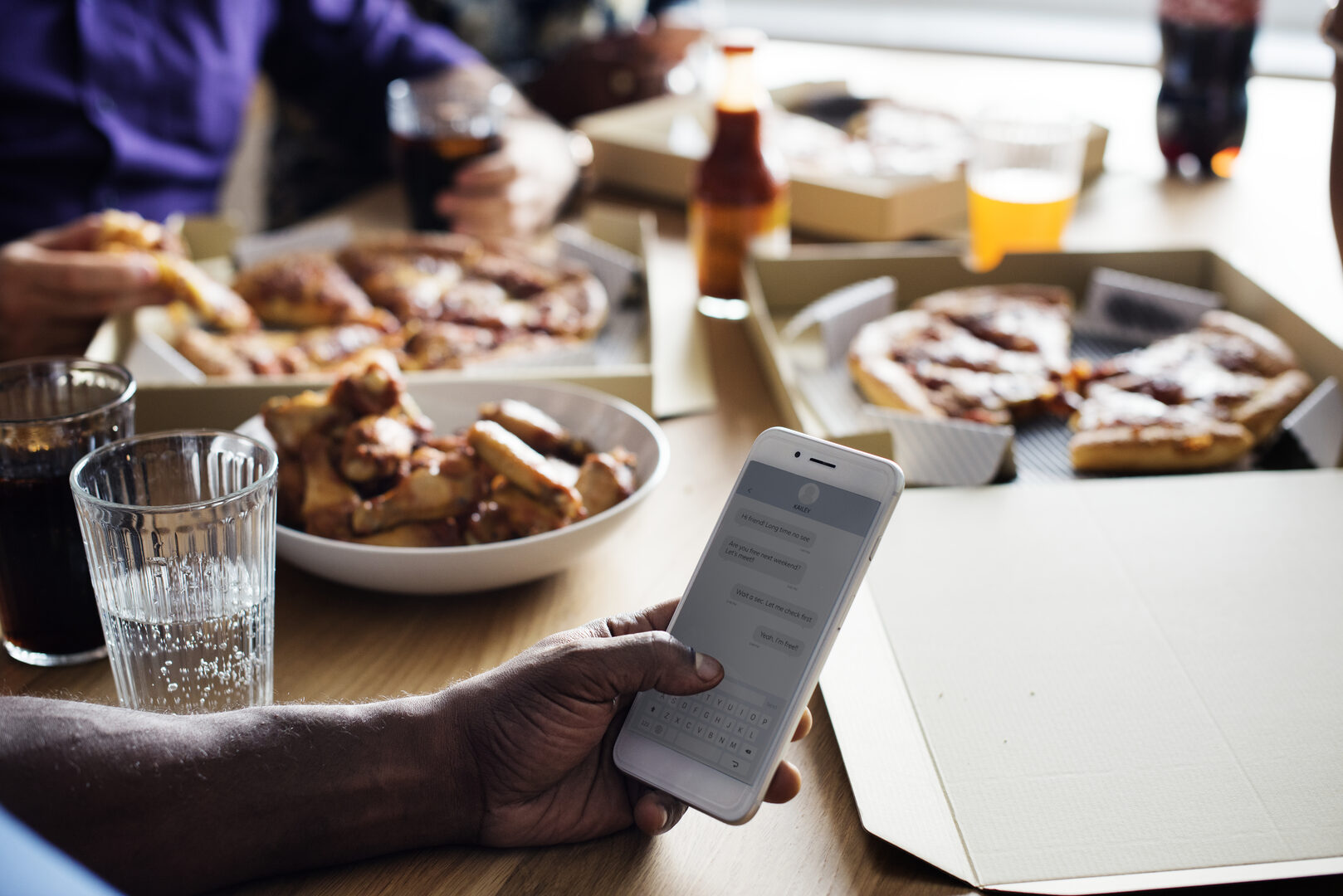
The way people buy online has shifted. Not gradually — decisively. In 2025, global conversational commerce transactions surpassed $290 billion, and projections for 2026 put that figure well above $350 billion. The checkout form, the multi-step cart flow, the “proceed to payment” button buried three clicks deep — these are relics of desktop-era thinking. Today, customers expect to buy the same way they talk: through a message.
Conversational commerce is not a buzzword. It is a structural change in how commerce operates. Brands that understand this are building their entire customer experience around messaging. Those that do not are watching their cart abandonment rates climb and their mobile conversion numbers stagnate.
This guide breaks down everything you need to know about conversational commerce in 2026 — what it is, why it works, how it compares to traditional checkout, and how to implement it in your own store. Whether you run a WooCommerce shop, a Shopify storefront, or a custom e-commerce platform, the principles here apply. And if you are looking for a practical way to get started, we will show you exactly how WhatsApp fits into this picture.
What Is Conversational Commerce?
Conversational commerce is the practice of selling products and services through messaging interfaces. Instead of navigating a website, adding items to a cart, and filling out a checkout form, the customer interacts with a business through a chat — asking questions, selecting products, confirming orders, and completing payment all within a messaging flow.
The term was coined by Chris Messina in 2015, but the concept has matured far beyond its origins. In 2026, conversational commerce encompasses:
- Chat-based ordering — Customers send a message to place an order directly.
- AI-assisted product discovery — Chatbots and assistants help customers find what they need through natural dialogue.
- In-chat payments — Payment links, integrated wallets, and one-tap checkout inside messaging apps.
- Post-purchase support — Order tracking, returns, and follow-up handled in the same conversation thread.
- Proactive engagement — Businesses reach out with personalized offers, restock reminders, and abandoned cart recovery via messaging.
The unifying principle is simple: meet customers where they already spend their time — in messaging apps — and remove every unnecessary step between intent and purchase.
For a deeper look at how WhatsApp specifically fits into this model, see our complete WhatsApp commerce guide.
The Rise of Messaging-Based Shopping
The numbers tell a clear story. Over 3 billion people use messaging apps daily. WhatsApp alone serves more than 2.7 billion monthly active users across 180+ countries. In markets like India, Brazil, Indonesia, and across Southeast Asia, WhatsApp is not just a communication tool — it is the primary digital interface for daily life.
Several forces are driving the shift toward messaging-based shopping:
Mobile dominance. More than 72% of global e-commerce traffic now comes from mobile devices. Traditional checkout flows were designed for desktop screens with keyboards. On a 6-inch phone screen, those same flows create friction. Messaging interfaces, by contrast, are native to mobile. They require no navigation, no form-filling, and no pinch-to-zoom. For a detailed look at what this means for store owners, read our guide on mobile commerce and WhatsApp ordering.
Trust through familiarity. Customers trust the apps they use every day. Sending a WhatsApp message to a business feels personal and direct in a way that filling out a web form does not. This trust translates directly into higher conversion rates and repeat purchases.
Speed of interaction. A messaging exchange that takes 90 seconds can accomplish what a traditional checkout flow handles in 4-5 minutes. Fewer steps, fewer drop-offs.
The support-to-sales continuum. When a customer asks a question about a product and receives an answer in the same thread where they can immediately place an order, the gap between consideration and purchase collapses.
Key insight: Businesses using conversational commerce channels report 3-5x higher conversion rates compared to traditional mobile checkout flows. The reason is not technology — it is the removal of friction at every step of the buying journey.
Conversational Commerce vs. Traditional Checkout
Understanding the difference between these two approaches is essential for any merchant evaluating their strategy. Here is a direct comparison:
| Dimension | Traditional Checkout | Conversational Commerce |
|---|---|---|
| Customer journey | Browse → Add to cart → Fill form → Pay → Confirm | Message → Confirm → Pay → Done |
| Number of steps | 5-7 steps typical | 2-3 steps typical |
| Average completion time | 3-5 minutes | 60-120 seconds |
| Cart abandonment rate | 70-80% on mobile | 25-40% via messaging |
| Personalization | Algorithm-driven, impersonal | Conversational, adaptive, human-feeling |
| Customer support | Separate channel (email, ticket) | Same thread, instant |
| Repeat purchase friction | Re-enter details or log in | Send a message — history preserved |
| Trust signal | SSL badge, reviews | Direct relationship with a known contact |
| Best suited for | Complex product catalogs, desktop users | Mobile-first audiences, relationship-driven sales |
The comparison is not about one approach being universally superior. Traditional checkout still works for large catalog browsing on desktop. But for mobile-first audiences, impulse-friendly products, repeat customers, and markets where messaging apps dominate daily life, conversational commerce outperforms traditional checkout on nearly every metric.
For a strategic framework on building around this model, see our guide on building a WhatsApp-first e-commerce strategy.
Why Customers Prefer Messaging
Customer preference for messaging is not theoretical. Meta’s own research shows that over 65% of consumers across age groups say they prefer messaging a business over calling or emailing. Among Gen Z and millennial shoppers, that figure exceeds 75%.
The reasons are consistent across surveys and markets:
-
Asynchronous convenience. Customers can start a conversation, leave to handle something else, and return without losing context. No session timeouts. No expired carts.
-
Lower commitment threshold. Sending a message feels low-stakes. Visiting a website, creating an account, and entering payment details feels like a commitment. Messaging lowers the barrier to initial engagement.
-
Human connection. Even when automated, messaging feels more personal than a web interface. Customers feel heard in a way that clicking through a funnel does not replicate.
-
Integrated history. The conversation thread serves as a receipt, a support log, and a reorder mechanism all in one place. Customers do not need to dig through email confirmations or remember login credentials.
-
Rich media support. Customers can send photos of what they want, share screenshots, or receive product images and videos inline. This is especially powerful for custom or visual products.
This is also why WhatsApp outperforms traditional live chat in e-commerce contexts — it lives on the customer’s device, not on your website tab.
WhatsApp as a Conversational Commerce Platform
Among all messaging platforms, WhatsApp occupies a unique position for commerce. It combines massive global reach with end-to-end encryption, rich media support, and a business-grade API that enables automation at scale.
Here is what makes WhatsApp particularly effective for conversational commerce:
Reach without app fatigue. Your customers already have WhatsApp installed. You do not need them to download another app, create another account, or learn another interface.
The WhatsApp Business API. This enables automated messaging, catalog integration, order notifications, and CRM connectivity. Businesses can handle hundreds of conversations simultaneously while maintaining a personal feel.
Click-to-WhatsApp ads. Meta’s advertising platform allows businesses to run ads on Facebook and Instagram that open a WhatsApp conversation directly. This eliminates the landing page entirely — customers go from seeing an ad to chatting with a business in one tap.
Catalog and payment features. WhatsApp’s built-in catalog lets businesses showcase products within the app. Combined with payment links or native payment integrations in supported markets, the entire purchase flow can happen inside WhatsApp.
Global trust. In regions where e-commerce fraud is a concern, customers trust WhatsApp conversations with verified business accounts more than they trust unfamiliar websites.
For a comprehensive look at how WhatsApp fits into an e-commerce operation, our WhatsApp Business for e-commerce guide covers everything from setup to advanced automation.
Building a WhatsApp-First Customer Experience
A WhatsApp-first customer experience is not simply adding a WhatsApp button to your website. It means rethinking the customer journey so that messaging is the primary — not supplementary — channel for discovery, purchase, and support.
Here is what a WhatsApp-first experience looks like in practice:
Discovery phase. Instead of relying solely on product pages, you share curated product recommendations via WhatsApp broadcasts or respond to inquiries with personalized suggestions. A customer messages “I need a gift for my wife’s birthday under $50” and receives three tailored options within seconds.
Purchase phase. The customer selects a product, confirms their shipping address (which WhatsApp can auto-populate from previous orders), and receives a payment link — all within the same chat. No website navigation required.
Post-purchase phase. Order confirmation, shipping updates, and delivery notifications arrive as WhatsApp messages. If there is an issue, the customer replies in the same thread. No support ticket, no hold music, no “please describe your issue” forms.
Re-engagement phase. Two weeks later, the business sends a personalized message: “Your wife loved the scarf — we just got matching earrings in stock. Want to take a look?” The customer replies “yes” and a new sale begins.
This is not hypothetical. Businesses implementing this model through tools like QuickOrder for WhatsApp are seeing measurable improvements in customer lifetime value and repeat purchase rates.
Ready to bring conversational commerce to your store?
QuickOrder for WhatsApp connects your WooCommerce store directly to WhatsApp, enabling one-click ordering, automated order messages, and a seamless chat-based buying experience.
Explore Features | View Pricing
From Support to Sales: The Conversational Advantage
One of the most powerful — and underappreciated — aspects of conversational commerce is how it collapses the boundary between support and sales. In a traditional e-commerce setup, support and sales are separate functions with separate tools, separate teams, and separate metrics. In conversational commerce, they are the same conversation.
Consider this scenario: A customer messages asking about the return policy for a product they are considering. In a traditional flow, they would visit a FAQ page, read the policy, navigate back to the product page, and maybe complete checkout. More likely, they would get distracted and leave. In a conversational flow, the business answers the return question and immediately follows up with “Would you like me to place the order for you?” The customer says yes. Sale closed.
This is not upselling in the aggressive sense. It is natural conversation that happens to end in a transaction. And it works because the customer is already engaged, already trusting, and already in a communication mode.
According to Salesforce’s State of the Connected Customer report, 73% of customers expect companies to understand their needs and expectations. Conversational interfaces make this possible because every interaction adds context to the relationship.
Learn how to leverage this dynamic in our guide on using WhatsApp as a customer support channel for WooCommerce.
Takeaway: Businesses that unify support and sales in a single messaging thread see up to 40% higher customer satisfaction scores and 25% increases in average order value. The conversation itself becomes the conversion mechanism.
Mobile Commerce and the Messaging Connection
Mobile commerce and conversational commerce are converging. As mobile devices account for an ever-larger share of online purchases, the limitations of traditional mobile checkout become more acute. Small screens, fiddly forms, slow page loads, and clunky payment flows all compound to create the friction that drives mobile cart abandonment above 80% in many categories.
Messaging solves these problems structurally:
- No forms. Address, payment, and order details are exchanged conversationally or pulled from previous interactions.
- No page loads. Messaging apps are optimized for speed and offline resilience. There is no waiting for a product page to render.
- No navigation. The conversation is the interface. Customers do not need to find the right page — they describe what they want.
- No account creation. The customer’s phone number is their identity. No passwords, no email verification, no forgotten credentials.
A study by Juniper Research projects that messaging-based commerce will account for over 20% of all mobile transactions by the end of 2027, up from approximately 8% in 2024. The trajectory is steep and accelerating.
For WooCommerce store owners, this convergence presents both a challenge and an opportunity. The challenge is that your existing mobile checkout is likely underperforming. The opportunity is that integrating WhatsApp ordering can dramatically improve your mobile conversion rate without rebuilding your entire storefront. Our guide on mobile commerce and WhatsApp ordering covers the practical steps.
Implementing Conversational Commerce in WooCommerce
If you run a WooCommerce store, implementing conversational commerce does not require a platform migration. It requires a strategic integration layer that connects your existing product catalog and order management to a messaging interface.
Here is a practical implementation roadmap:
Step 1: Add WhatsApp as an ordering channel. Use a plugin like QuickOrder for WhatsApp to add WhatsApp ordering buttons to your product pages and cart. This gives customers the option to complete their purchase via WhatsApp instead of the traditional checkout form.
Step 2: Configure automated order messages. Set up message templates that pre-populate with order details — product name, quantity, price, and customer information. This eliminates manual data entry on both sides.
Step 3: Create response workflows. Define how your team handles incoming WhatsApp orders. Who responds? What is the response time target? How are orders confirmed and tracked? Systematize this early.
Step 4: Enable catalog browsing via chat. Share product links, images, and descriptions within WhatsApp conversations. Let customers browse and select without leaving the messaging app.
Step 5: Integrate with your CRM. Connect WhatsApp conversations to your customer database so that every interaction builds a richer customer profile. This enables personalized recommendations and targeted re-engagement.
Step 6: Automate post-purchase communication. Send order confirmations, shipping updates, and delivery notifications via WhatsApp. This keeps the customer in the conversational channel throughout the entire lifecycle.
For a detailed walkthrough of how this works with WooCommerce specifically, see our WooCommerce WhatsApp integration guide. And for revenue-focused tactics, our article on proven ways WhatsApp increases WooCommerce sales provides actionable strategies.
Customer Experience Design for Chat-Based Sales
Designing a great conversational commerce experience requires different thinking than designing a great website. The principles of good UX still apply — clarity, speed, minimal friction — but the medium changes everything about how those principles are executed.
Keep messages concise. Nobody wants to read a wall of text in a chat window. Break information into short, scannable messages. Use line breaks, bullet points, and emojis sparingly but effectively.
Respond fast. In messaging, response time expectations are measured in minutes, not hours. Harvard Business Review research has shown that response time is one of the strongest predictors of conversion. Businesses that respond within 5 minutes are 21x more likely to qualify a lead than those that respond within 30 minutes.
Use rich media. Send product photos, short videos, and voice messages when appropriate. A 15-second video showing a product in use is more persuasive than three paragraphs of description.
Offer clear choices. Instead of open-ended questions like “What are you looking for?”, offer structured options: “Are you looking for A, B, or C?” This keeps the conversation moving toward a purchase decision.
Preserve context. Never make a returning customer repeat information. If they ordered before, reference their previous purchases. If they asked a question last week, follow up on it.
Balance automation and humanity. Use automated messages for routine interactions (order confirmations, shipping updates, business hours) but ensure a human is available for complex questions, complaints, and high-value sales conversations.
Design for the reorder. The most profitable moment in conversational commerce is the repeat purchase. Make it effortless: “Would you like to reorder the same items as last time?” One-word replies should be enough to complete a repeat order.
The Future of Conversational Commerce
The trajectory of conversational commerce points toward deeper integration, greater automation, and broader adoption. Several trends will shape the next 2-3 years:
AI-native shopping assistants. Large language models are making chat-based product discovery genuinely useful. Customers will increasingly interact with AI assistants that understand nuanced requests, compare products intelligently, and handle the full purchase flow autonomously.
In-chat payment maturation. Payment infrastructure inside messaging apps is expanding rapidly. WhatsApp Pay is live in India and Brazil with more markets coming. As in-chat payments become seamless, the last friction point in messaging-based purchases disappears.
Voice commerce via messaging. Voice messages are already popular in WhatsApp conversations globally. As speech recognition improves, customers will place orders by sending a voice note: “Send me two of those candles I ordered last month.” The system transcribes, confirms, and processes.
Omnichannel unification. The distinction between website, app, and messaging will blur. A customer might discover a product on Instagram, ask a question via WhatsApp, and complete the purchase without ever visiting a traditional checkout page. The conversation thread becomes the customer’s portable shopping cart.
B2B conversational commerce. While much of the current conversation focuses on B2C, wholesale and B2B ordering is a natural fit for messaging. Repeat orders, relationship-based selling, and negotiated pricing all work better in conversation than in forms.
For a strategic view of how WhatsApp fits into your broader sales and marketing efforts, our WhatsApp sales playbook covers the full lifecycle from lead generation to repeat purchase.
Getting Started with Conversational Commerce
If you have read this far, the case for conversational commerce should be clear. The question is not whether to adopt it — it is how quickly you can implement it. Here is a pragmatic starting point:
Start where your customers already are. If your customers use WhatsApp (and statistically, most of them do), start there. Do not build a custom chat solution. Do not launch on a platform your customers have not adopted. Meet them on WhatsApp.
Begin with ordering, not everything. You do not need to automate your entire operation on day one. Start by enabling WhatsApp-based ordering alongside your existing checkout. Let customers choose. Track which channel converts better. The data will guide your next steps.
Measure what matters. Track conversion rate by channel, response time, customer satisfaction, repeat purchase rate, and average order value. Conversational commerce should improve all five. If it does not, adjust your approach.
Invest in response infrastructure. Conversational commerce only works if someone (or something) responds promptly. Ensure you have the team capacity or automation in place to handle messaging volume before you drive traffic to a WhatsApp channel.
Iterate based on conversations. Every customer conversation is product research. Pay attention to the questions customers ask, the objections they raise, and the language they use. This feedback loop is one of the most valuable byproducts of conversational commerce.
The shift from form-based checkout to conversation-based commerce is not a trend that will reverse. It is the natural evolution of how humans prefer to transact — through dialogue, trust, and relationship. The businesses that recognize this and adapt their operations accordingly will own the next decade of e-commerce growth.
If you run a WooCommerce store and want to start today, QuickOrder for WhatsApp gives you the tools to add conversational ordering to your store in minutes. Explore the features and pricing to find the right fit for your business.
Related Articles

Mobile Commerce in 2026: Why Your Store Needs WhatsApp Ordering
Mobile commerce dominates e-commerce in 2026. Learn why WhatsApp ordering is essential for capturing mobile shoppers and how to implement it in your WooCommerce store.

How to Build a WhatsApp-First E-Commerce Strategy for Your Store
Discover how to create a WhatsApp-first e-commerce strategy that drives engagement, builds customer loyalty, and increases sales for your online store.

WhatsApp Business for E-Commerce: The Complete Resource
Everything e-commerce store owners need to know about WhatsApp Business. From account setup to advanced strategies, this guide covers the complete WhatsApp Business ecosystem.